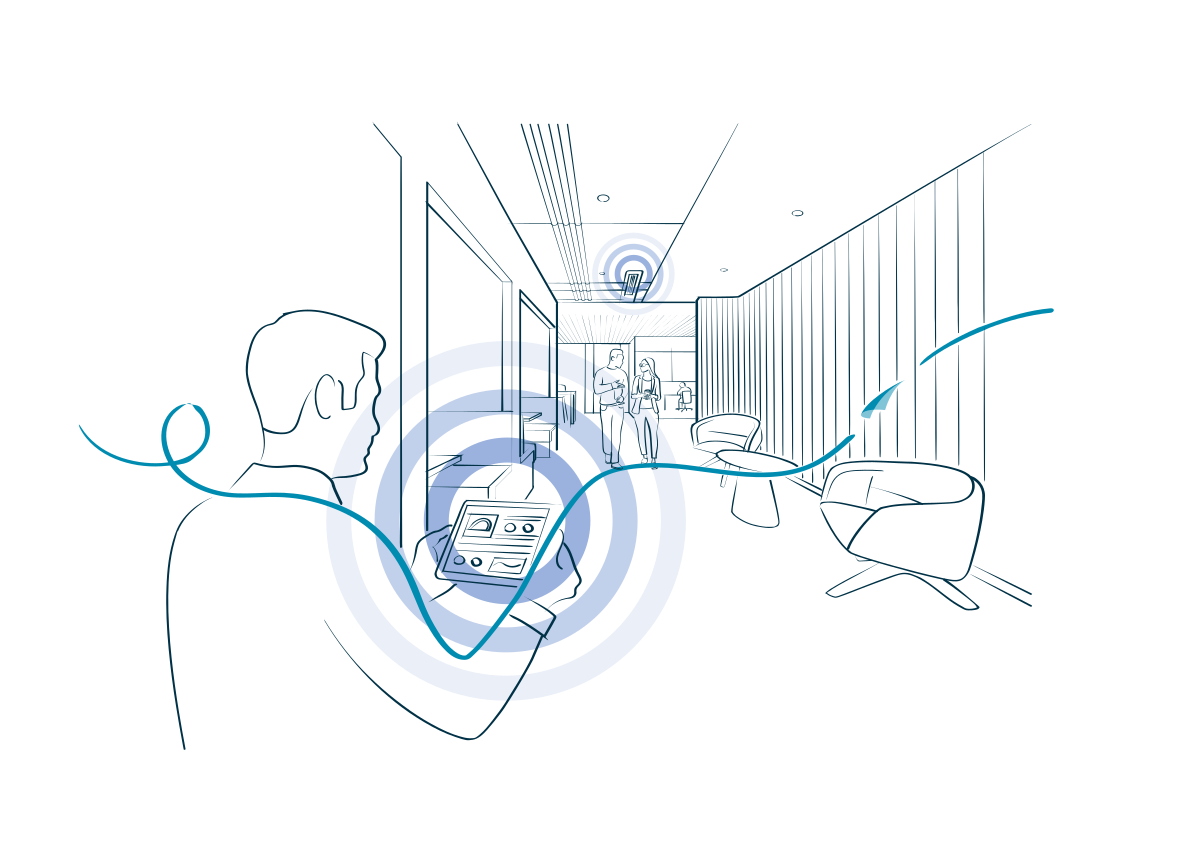


There’s no shortage of technology promising to make buildings more efficient. But for our customers, the important question is: what actually works in practice?
Over the past few years, we’ve been putting a range of sustainable technologies to the test at our head office in Leatherhead. By trialling them in a working building, we can gather real-world evidence of the difference they can make and help our customers make more informed decisions about reducing energy use, carbon emissions and operating costs across their buildings and estates.
Working with several of our Wates Innovation Network (WIN) partners, we’ve been testing market-ready solutions to understand how they perform in practice, measure their impact and explore where they could be used more widely.
And we’re already seeing encouraging results.
Measurable Energy uses smart sockets and machine learning to understand when and where equipment is using energy, automatically switching off appliances when they aren’t needed. At Leatherhead, we’ve seen a 44% reduction in plug-load energy use and a 40% reduction in associated carbon emissions, with an estimated payback of around 18 months.
Sabien Technology’s retrofit M2G cloud technology identifies and reduces unnecessary energy consumption. Between January and September 2024, it helped us save more than 57,000 kWh of energy, equivalent to 10.5 tonnes of CO₂.
We’ve also been working with Verv to look more closely at the performance of our HVAC systems. Although we already had a building management system in place at Leatherhead before working with Verv, their technology identified further opportunities to reduce energy use. Between April and June 2025, it identified more than 500 out-of-hours energy alerts, helping us reduce out-of-hours energy consumption by 18% in the areas served.
Better data is also helping us understand how our building is being used. Direk has introduced occupancy monitoring across meeting rooms, desks, pods and collaborative spaces. The insight gathered has helped us identify a roadmap for a potential 30% reduction in energy use, equivalent to around 17 tonnes of CO₂ each year.
And it’s not all about energy. We’re also trialling Thrive’s biological cleaning solutions as an alternative to harsher chemicals, with potential benefits for pipework and reduced reactive maintenance.
Watch the video to see what we’ve been testing at Leatherhead, the results we’ve seen so far and hear from some of the businesses behind the solutions.
For us, this is what WIN is about: bringing our teams and innovation partners together around real building challenges, testing market-ready solutions in a working environment and building the evidence to support wider adoption where appropriate.
Our experience at Leatherhead helps customers make better-informed decisions about their own buildings and estates, drawing on both measured results and opportunities for further improvement. To explore solutions for your building, get in touch with the WIN team.
To discuss how sustainable innovation could support your buildings and estate, contact Dr Zainab Dangana, who leads the Wates Innovation Network.
We make sourcing sustainable innovation simple
Visit the Wates Innovation Network (WIN) Portal and explore over 90 proven solutions and connect with trusted partners to transform your projects.